2006.12.04: December 4, 2006: Headlines: COS - Madagascar: Parks: The Ashland Daily Press: Mariah Raade's first three months in Madagascar were spent with a host family to learn about the culture, native language called Malagasy and to adjust to the heat and season reversal of the Southern hemisphere
Peace Corps Online:
Directory:
Madagascar:
Peace Corps Madagascar :
The Peace Corps in Madagascar:
2006.12.04: December 4, 2006: Headlines: COS - Madagascar: Parks: The Ashland Daily Press: Mariah Raade's first three months in Madagascar were spent with a host family to learn about the culture, native language called Malagasy and to adjust to the heat and season reversal of the Southern hemisphere
Mariah Raade's first three months in Madagascar were spent with a host family to learn about the culture, native language called Malagasy and to adjust to the heat and season reversal of the Southern hemisphere
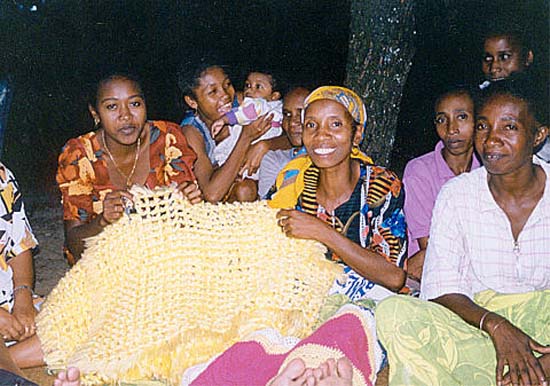
Mariah is the first and only volunteer in this village. The closest volunteer is 20 kilometers away in her banking town, Ambanja. She rides a bicycle there once a week to shop and do business. Her counterpart, Aubin, is a man who works for Madagascar's version of the park service. He is in contact with her almost every day. She says the villagers are accepting her and she is feeling more comfortable. This was evidenced by the invitation she received from two young women in her village. They asked if she "wanted to do lunch" one day. So Mariah rode her bike to the market, purchased a live chicken for two dollars and brought it back. The other women killed it, cleaned it and put the whole chicken, head and feet into a pot with potatoes, carrots and seasonings. It was delicious but she insisted that the head and feet delicacies were left for her friends to enjoy!
Mariah Raade's first three months in Madagascar were spent with a host family to learn about the culture, native language called Malagasy and to adjust to the heat and season reversal of the Southern hemisphere
It's not a movie, it's Madagascar
The Daily Press
Monday, December 04th, 2006 10:59:50 AM
By KARLA RAADE
For The Daily Press
If your daily life includes jumping rats, hissing cockroaches, leaping lemurs and lost penguins, you could be in Madagascar. The fourth largest island on Earth, just off the southeast coast of Africa is about twice the size of the state of Arizona. With innumerable endemic species of plants, animals, birds and insects, environmental issues are huge.
So with a sense of adventure, a desire to help others, and a natural resources/wildlife ecology degree from UW-Madison, Mariah Raade became a Peace Corps volunteer in February of this year. Her first three months in Madagascar were spent with a host family to learn about the culture, native language called Malagasy and to adjust to the heat and season reversal of the Southern hemisphere. She adapted to eating rice three times a day, no indoor plumbing and staying inside after dark. The villagers believe "there are witches out there after dark."
In May, she was sent to her assigned site. A village on the northwest coast called Antanandava. There are 1,400 people living there with no electricity or running water. Well, actually you do "run" for your water to the nearest river about eight minutes from town. The living water of the river provides everyone their daily needs. Everyone, including Mariah, drinks from, bathes in, washes clothes and dishes in and socializes at the banks of the stream. The Peace Corps requires water filter and treatment supplies and private toilet facilities for their volunteers. So she has the only latrine in town. Let your imagination run with the fact that 1,400 people have to use "nature" to relieve themselves every day of their lives.
Mariah is the first and only volunteer in this village. The closest volunteer is 20 kilometers away in her banking town, Ambanja. She rides a bicycle there once a week to shop and do business. Her counterpart, Aubin, is a man who works for Madagascar's version of the park service. He is in contact with her almost every day.
She says the villagers are accepting her and she is feeling more comfortable. This was evidenced by the invitation she received from two young women in her village. They asked if she "wanted to do lunch" one day. So Mariah rode her bike to the market, purchased a live chicken for two dollars and brought it back. The other women killed it, cleaned it and put the whole chicken, head and feet into a pot with potatoes, carrots and seasonings. It was delicious but she insisted that the head and feet delicacies were left for her friends to enjoy!
Mariah plans to do some environmental education in the schools and "civic" groups regarding alternatives to "slash and burn" agriculture, more productive rice planting and harvesting techniques and health and sanitation issues. She told us that she can't concentrate on saving the rain forest or the lemurs when there are so many humanitarian concerns to be addressed first. So she is writing a proposal to have three wells dug and ten latrines put in her village. The wells will be hand dug, two of the latrines will be put near the school and the rest throughout the village.
Spending a little over two years in a third world country will be a life-changing event for Mariah. Madagascar is an island paradise with unparalled beauty, poverty and potential. If anyone is moved to change lives and receive information about Mariah's well/latrine project through the Peace Corps Partnership Program, please send your e-mail address to: .
Karla Raade, RN, works in Perioperative Services of Memorial Medical Center and is Mariah Raade's mother.
Links to Related Topics (Tags):
Headlines: December, 2006; Peace Corps Madagascar; Directory of Madagascar RPCVs; Messages and Announcements for Madagascar RPCVs; Parks
When this story was posted in January 2007, this was on the front page of PCOL:





Peace Corps Online The Independent News Forum serving Returned Peace Corps Volunteers
 | All Volunteers Safe in Fiji
All Volunteers in Fiji are safe and accounted for. The Peace Corps is monitoring the situation very closely. Volunteers are on standfast but there are no plans for evacuation at this time. Peace Corps is working closely with the US embassy and with host country partners to monitor the situation. Peace Corps is confident that volunteers are not in harm's way. The military seized control of Fiji on December 5 after weeks of threats. Subscribe to our news feed to read the latest breaking news. |
 | Ron Tschetter in Morocco and Jordan
On his first official trip since being confirmed as Peace Corps Director, Ron Tschetter (shown at left with PCV Tia Tucker) is on a ten day trip to Morocco and Jordan. Traveling with his wife (Both are RPCVs.), Tschetter met with volunteers in Morocco working in environment, youth development, health, and small business development. He began his trip to Jordan by meeting with His Majesty King Abdullah II and Her Majesty Queen Rania Al Abdullah and discussed expanding the program there in the near future. |
 | Chris Dodd's Vision for the Peace Corps
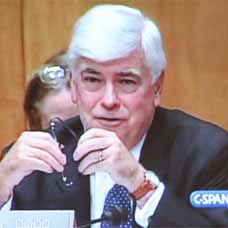
Senator Chris Dodd (RPCV Dominican Republic) spoke at the ceremony for this year's Shriver Award and elaborated on issues he raised at Ron Tschetter's hearings. Dodd plans to introduce legislation that may include: setting aside a portion of Peace Corps' budget as seed money for demonstration projects and third goal activities (after adjusting the annual budget upward to accommodate the added expense), more volunteer input into Peace Corps operations, removing medical, healthcare and tax impediments that discourage older volunteers, providing more transparency in the medical screening and appeals process, a more comprehensive health safety net for recently-returned volunteers, and authorizing volunteers to accept, under certain circumstances, private donations to support their development projects. He plans to circulate draft legislation for review to members of the Peace Corps community and welcomes RPCV comments. |
 | He served with honor
One year ago, Staff Sgt. Robert J. Paul (RPCV Kenya) carried on an ongoing dialog on this website on the military and the peace corps and his role as a member of a Civil Affairs Team in Iraq and Afghanistan. We have just received a report that Sargeant Paul has been killed by a car bomb in Kabul. Words cannot express our feeling of loss for this tremendous injury to the entire RPCV community. Most of us didn't know him personally but we knew him from his words. Our thoughts go out to his family and friends. He was one of ours and he served with honor. |
 | Peace Corps' Screening and Medical Clearance
The purpose of Peace Corps' screening and medical clearance process is to ensure safe accommodation for applicants and minimize undue risk exposure for volunteers to allow PCVS to complete their service without compromising their entry health status. To further these goals, PCOL has obtained a copy of the Peace Corps Screening Guidelines Manual through the Freedom of Information Act (FOIA) and has posted it in the "Peace Corps Library." Applicants and Medical Professionals (especially those who have already served as volunteers) are urged to review the guidelines and leave their comments and suggestions. Then read the story of one RPCV's journey through medical screening and his suggestions for changes to the process. |
 | The Peace Corps is "fashionable" again
The LA Times says that "the Peace Corps is booming again and "It's hard to know exactly what's behind the resurgence." PCOL Comment: Since the founding of the Peace Corps 45 years ago, Americans have answered Kennedy's call: "Ask not what your country can do for you--ask what you can do for your country. My fellow citizens of the world: ask not what America will do for you, but what together we can do for the freedom of man." Over 182,000 have served. Another 200,000 have applied and been unable to serve because of lack of Congressional funding. The Peace Corps has never gone out of fashion. It's Congress that hasn't been keeping pace. |
 | PCOL readership increases 100%
Monthly readership on "Peace Corps Online" has increased in the past twelve months to 350,000 visitors - over eleven thousand every day - a 100% increase since this time last year. Thanks again, RPCVs and Friends of the Peace Corps, for making PCOL your source of information for the Peace Corps community. And thanks for supporting the Peace Corps Library and History of the Peace Corps. Stay tuned, the best is yet to come. |
 | History of the Peace Corps
PCOL is proud to announce that Phase One of the "History of the Peace Corps" is now available online. This installment includes over 5,000 pages of primary source documents from the archives of the Peace Corps including every issue of "Peace Corps News," "Peace Corps Times," "Peace Corps Volunteer," "Action Update," and every annual report of the Peace Corps to Congress since 1961. "Ask Not" is an ongoing project. Read how you can help. |
Read the stories and leave your comments.

Some postings on Peace Corps Online are provided to the individual members of this group without permission of the copyright owner for the non-profit purposes of criticism, comment, education, scholarship, and research under the "Fair Use" provisions of U.S. Government copyright laws and they may not be distributed further without permission of the copyright owner. Peace Corps Online does not vouch for the accuracy of the content of the postings, which is the sole responsibility of the copyright holder.
Story Source: The Ashland Daily Press
This story has been posted in the following forums: : Headlines; COS - Madagascar; Parks
PCOL35350
43