He wondered how the authors would have responded had they revisited their destinations decades later. Theroux believed that the second journeys could in fact be more revealing for both the writer and the reader. “The traveller in the second journey would see changes both in the places and people, and would respond in a different way also because one’s perceptions change over time.” It was such a belief that had prompted him to attempt journeys to the same places more than once. He had retraced a journey to Africa and seen things for better or worse. In Africa he got to know that some of his former pupils had died, the school he had helped build was in ruins, but some of the trees he had planted were still there. Travelling to India several years after he wrote the Great Railway Bazar, he returned to India and found a new confidence in her people. But at the same time, the men and women also had sustained links with their rich traditions, which he could not find in some neighbouring countries. Author Paul Theroux served as a Peace Corps Volunteer in Malawi in the 1960's.
Paul Theroux finds India resurgent
Travel writer Theroux finds India resurgent
By A Staff Reporter
GUWAHATI, Feb 1 – For him it was a new journey that had its roots in an earlier one. The inveterate train traveller and note-taker Paul Theroux journeyed into Assam for the first time, decades after he had travelled through India. Unlike many foreign visitors, he travelled by train from Howrah to Guwahati, and within a few hours was interacting with media persons and his readers. No surprise that he, among other subjects, talked about the virtues of “overland travel.”
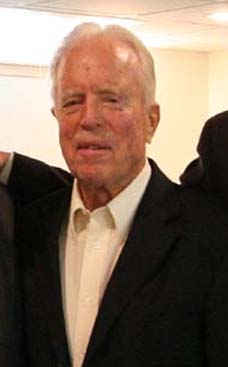
Paul Edward Theroux, 67, in his customary black-rimmed glasses and an Indian jacket, dwelt on his understanding of travel writing and his insights as an author. “I am not just interested in the places, but in the human architecture of the places I visit,” he said, revealing his interest in people and their daily affairs and the manner they responded to their surroundings.
Citing the names of several well-known works of travel writing, including Bruce Chatwin’s iconic In Patagonia, he said that one constant among those was the fact that their authors never repeated their journeys again.
He wondered how the authors would have responded had they revisited their destinations decades later.
Theroux believed that the second journeys could in fact be more revealing for both the writer and the reader. “The traveller in the second journey would see changes both in the places and people, and would respond in a different way also because one’s perceptions change over time.”
It was such a belief that had prompted him to attempt journeys to the same places more than once. He had retraced a journey to Africa and seen things for better or worse. In Africa he got to know that some of his former pupils had died, the school he had helped build was in ruins, but some of the trees he had planted were still there.
Travelling to India several years after he wrote the Great Railway Bazar, he returned to India and found a new confidence in her people. But at the same time, the men and women also had sustained links with their rich traditions, which he could not find in some neighbouring countries.
The peripatetic traveller, who had canoed between islands of Polynesia, spoke about the virtues of journeying on land where the traveller spotted “the similar, the less similar, the new and the absolutely alien…” till the journey became a sort of revelations.
Overland journeys provided better opportunities for the traveller to see things and interact with people. And perhaps made the journey just as interesting as the destination.
There were, however, aspects of travel writing that he detested, and one was generalised views and opinions, which did no justice to a place or people. The fact that the traveller was always on the move and perceiving only a sliver of space and time also could act as a constraint in seeking a more rounded view.
Today’s address by Theroux was arranged by the journal Saatsori in collaboration with the American Centre, Kolkata. The writer was also accorded a warm felicitation by the organisers.