Rajeev told several stories. One was about the Dalit teacher at school going to the teashop but not sitting with everyone else to drink tea, washing his own cup after he was done. These are scenes I am very aware of, but it takes a Rajeev Goyal to retell the story with a freshness I could not. Another is of the same teacher getting "disappeared" by the Chief District Officer. He got apparently falsely accused of being a Maoist. The state has come down heavily against the Dalits as a community. If this were Yugoslavia and not Nepal, you would be calling it ethnic cleansing.
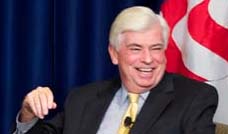
Nepal RPCV Rajeev Goyal Talks up Caste
Friday, November 11, 2005
Rajeev Goyal Talks Up Caste
I went to an amazing New York University event today for one primary reason: to tell the authors that their report, Caste Discrimination Leads To War, is the most powerful of all reports on Nepal I have read this year, and I have read virtually every report on the country that I have bumped into online by many reputed national and international groups. I think that is a lot coming from a guy for whom it has been all Nepal all the time for months now. Most domestic actors refuse to even touch the topic. Most visiting actors miss the details and the gravity of the situation. I think Rajiv Goyal's having been born in America, but having been an ethnic Indian gives him both a detachment and a natural sense of empathy that truly carries the day. I expect this report to get widely quoted in Nepal for years.
Rajeev Goyal and Smita Narula are the co-authors. There also was a third speaker, Mahabir Chaudhari. He is a Dalit who runs a NGO in Nepal that has a membership of something like 36,000 people. That is huge. That could practically be a political party.
The most powerful presence in the audience was a Dalit Indian who was currently engaged in some kind of post-doctoral work at NYU now, or something equally high floating. He made the point that democracy was not enough, that affirmative action was needed if the plight of the Dalits is to be truly addressed.
I can totally relate to his story. When V.P. Singh became prime minister of India in 1989 on the affirmative action platform, a lot of high caste Indians actually left the country. Their claim was the country was now going down the drain. The caste system is way more complex than racism and sexism. It is weird. Not to say it is evil.
I got to meet Rajeev only two days back at the Krishna Pahadi event. I am so glad I did. And today I also had the honor of walking with him to the train station. He was born in Long Island. He is a cheerful person. I also got to meet two of his friends.
Krishna Pahadi At New York University
Smita seemed to really keep up with the news on Nepal. She kept making casual references to many details of what is going on in Nepal.
Smita drew the broad framework during her talk, and Rajeev came in and filled the details with his acutely told stories that really brought the caste issue to life. He said most everyone he met in Nepal wanted to know what caste "Goyal" was. Go figure. Then he talked about the one Dalit teacher at the school he taught at. And how the Bahun students would all sit on the front benches, and the Dalits would huddle among themselves in the back.
This reminds me of some work I did and am doing for the Dalits in my homevillage in southeast Nepal. Here are 126 photos that show my brother Santosh distributing school supplies to Dalit children. The village has had a primary school for the longest time. But the Dalit children did not attend. There was this social barrier. The non-Dalits feel if the Dalits start going to school who will work in the fields. And the Dalits internalized that sentiment. I used my bulley pulpit. Because you are in America, you are a big shot in the village. So word was spread that Paramendra wants all the Dalit children to start going to school. That did it. That was the carrot, my "good" name. The stick was if locals create hurdles, Paramendra will not fund the building of that wall that needs to be added to the school building. But being realistic I also hired three private Dalit tutors who help the same students during off school hours. And all this cost very little money in dollar terms. By Dalits in the village in this case, I mean the Musahars, Chamars, Doms, Dusads, and even the Muslims. The Muslims in the village get treated like Dalits. I hope to expand on this whole experiment.
The Musahars in my homevillage are the most cheerful people I ever met. They are my favorite people. To me it is not even a caste crusade. It is just my personal memory of them that keeps me going on this mini project.
Curiously my father and my uncle have been two people who have not received any extortion letters from the Maoists. Some people in the village think I am a Maoist! If that is what it takes for them to "behave," fine by me.
Rajeev told several stories. One was about the Dalit teacher at school going to the teashop but not sitting with everyone else to drink tea, washing his own cup after he was done. These are scenes I am very aware of, but it takes a Rajeev Goyal to retell the story with a freshness I could not. Another is of the same teacher getting "disappeared" by the Chief District Officer. He got apparently falsely accused of being a Maoist. The state has come down heavily against the Dalits as a community. If this were Yugoslavia and not Nepal, you would be calling it ethnic cleansing.
Rajeev's presentation was poignant.
A lively question and answer session followed. And it continued on for long after the program was officially declared over. There were free-flowing conversations. And Rajiv offered me a free coke at the end.